
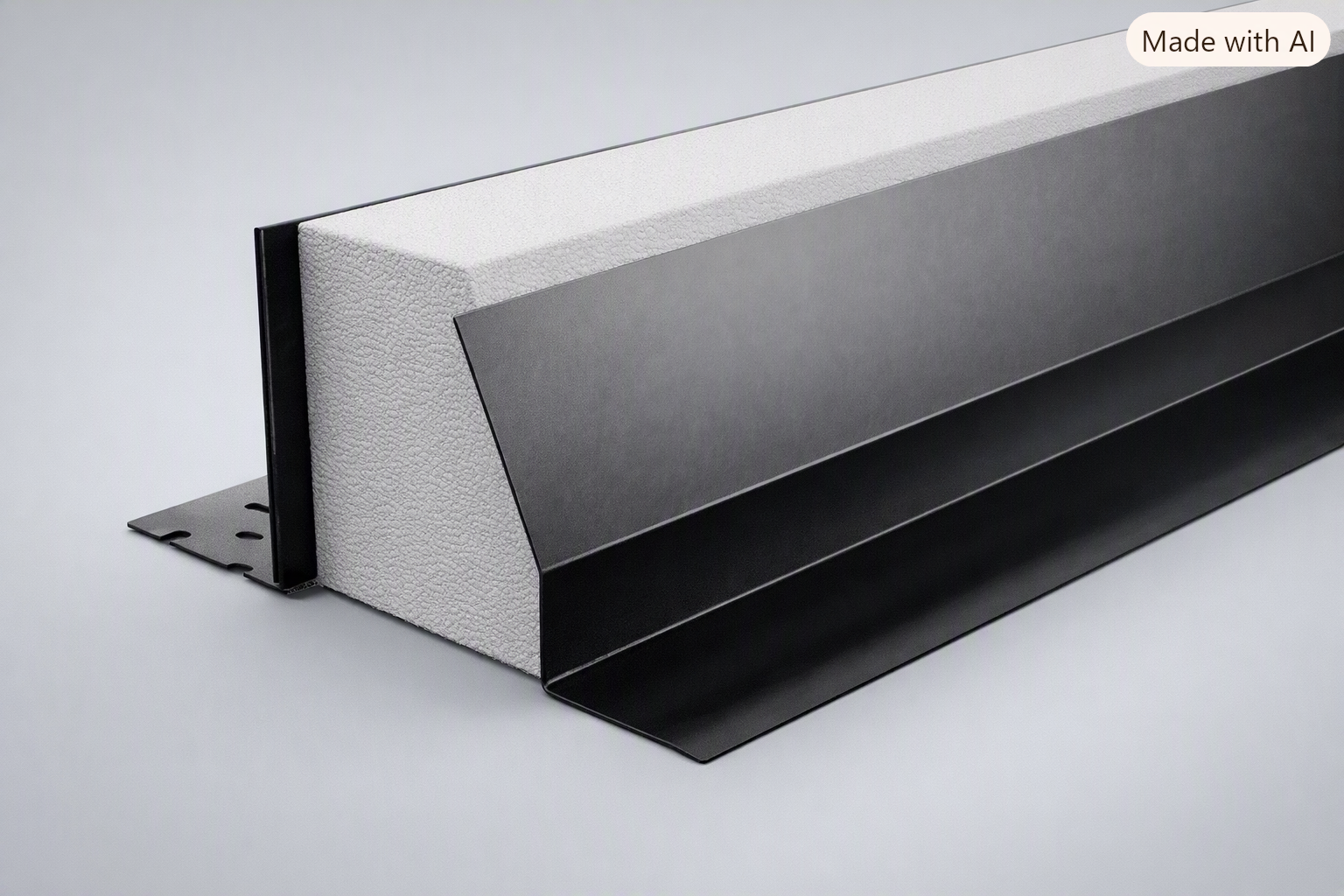
Thermally broken lintels significantly reduce thermal bridging, improve SAP scores, help meet Part L/Future Homes Standard and can facilitate reduction in insulation thickness in other areas.
They dramatically reduce thermal bridging at window/door heads
Lintels are one of the worst offenders for linear thermal bridging because a traditional steel lintel creates a direct conductive path between inner and outer leaf. Thermally broken lintels interrupt this path with an insulating break, cutting heat transfer almost to zero.
How much of a difference can they make in SAP Calculations?
We regularly see figures between 3-4% improvement in Fabric efficiency when using a thermally broken lintel compared to a standard lintel. This improvement could allow reduction in insulation in other areas, more flexible window glazing specification and air pressure test target.
It’s worth considering early on in the design process as it is not a solution that can be implemented later in the project. This is something we regularly bring to the attention of our clients at Design Stage especially if they are struggling to achieve the required fabric efficiency rating. Where possible by exceeding the design requirements, later in the project there can be scope to make adjustments and savings.
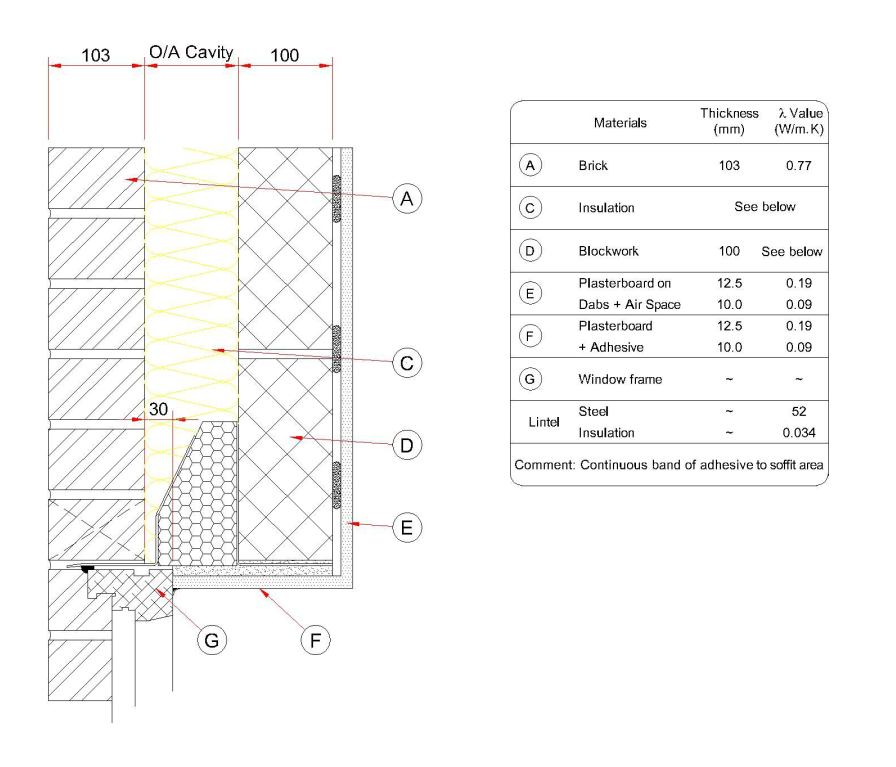
The key difference between a standard lintel and a thermally broken lintel shows up clearly in their Ψ‑values — the measure of heat loss at junctions. A traditional steel lintel creates a strong thermal bridge between the inner and outer leaf, resulting in a higher Ψ‑value and greater heat loss at window and door heads. Thermally broken lintels interrupt this conductive path with an insulated core, dramatically reducing the Ψ‑value and improving overall junction performance. In SAP terms, this lower Ψ‑value means less fabric heat loss, stronger DER/TER margins, and an easier route to Part L compliance. It’s a small detail that delivers a measurable improvement in new‑build energy performance.
What do they cost?
According to available information the cost could be £50-£150 more per lintel from companies such as Catnic and IG Lintels. The saving could easily exceed the cost, for example a hi spec of window double/triple glazing could be lowered because of the improvement in overall fabric efficiency. Below are links to two reputable suppliers:
Catnic – Thermally Broken Lintels
What About Future Homes Standard
As we know the FHS regulations will be harder to achieve relating to the fabric of the building. Using effective solutions such as thermally broken lintels is going to be very useful when trying to achieve compliance and balance design choices.
How Can NewBuildSAP Help?
At NewBuildSAP we work along with our clients, developers and architects to achieve compliance with Part L and the Future Homes Standard. We can advise from an energy efficiency perspective what solutions are available that we have seen to be effective. Contact us today if you have a project we can help you with!
